The G.R.E.A.T. Retention Method™

Human behaviour.
Better relationships.

The G.R.E.A.T. Retention Method™ is a behavioural framework for building a retention strategy, grounded in human psychology.

Five stages shape the post-sale emotional outcomes that turn customers into repeat buyers and advocates.

From emotion to advocacy — by design

Every stage changes
how the relationship feels.

The Method unfolds through Gratitude, Reinforcement, Engagement, Anchoring and Transformation — each designed to create a specific emotional outcome that moves the relationship from transaction to loyalty, and from loyalty to advocacy.

01Gratitude

Gratitude

Gratitude turns transaction into connection — and connection into emotional safety

Set the emotional foundation for long-term loyalty. Signal appreciation, safety, and respect — before logic takes over.

91%

Salesforce research found that 91% of customers are more likely to make a repeat purchase after a positive experience, and 71% say experience quality has influenced a buying decision.

Why gratitude matters

A transaction is neutral. It fulfils a need but creates no memory.

In after-sales marketing, Gratitude is not a courtesy — it is the first behavioural trigger. It interrupts neutrality by introducing recognition — the moment a customer feels seen, not processed.

This shifts the relationship from economic to emotional. The customer stops thinking like a buyer and starts thinking like a participant. This is the emotional permission required for customers to stay, return, and eventually advocate.

02Reinforcement

Reinforcement

Reinforcement turns emotion into conviction — and conviction into reassurance

Stabilise initial emotion by replacing doubt with certainty—before second-guessing begins.

94%

IBM, citing CEB research, reports that customers with a low-effort experience show 94% intention to repurchase and 88% say they would spend more.

Why reinforcement matters

Emotion alone is fragile.

After the high of a decision, doubt rushes in. In after-sales marketing, Reinforcement is not persuasion — it is cognitive protection. It provides evidence, proof, and clarity when uncertainty arises. 

This shifts the customer from feeling right to knowing they were right. The decision becomes mentally defended. The customer stops questioning their choice and starts protecting it, acting, albeit temporarily, as your brand advocate. The reassurance locks in trust, prevents early disengagement, and creates the psychological stability required for continued engagement.

03Engagement

Engagement

Engagement turns satisfaction into participation — and participation into identity

Move the relationship from passive approval to active involvement. Invite customers to act, contribute, and participate — not just consume.

23%

Gallup reports that fully engaged customers deliver a 23% premium in share of wallet, profitability, revenue, and relationship growth over the average customer.

Why engagement matters

Satisfaction is passive. It signals approval, but it does not sustain behaviour.

A satisfied customer can disappear silently. There is no friction, no attachment, no investment. Engagement changes this dynamic by introducing action — replies, contributions, presence, and shared moments. The moment a customer acts, they invest time, attention, or effort. That investment changes how they see the relationship.

The customer shifts from “I’m happy with this” to “I’m involved in this.” Once involvement begins, identity follows. The relationship stops being something they use and becomes something they participate in. At this stage, the customer no longer experiences the brand as external — it becomes part of how they see themselves.

04Anchoring

Anchoring

Anchoring turns loyalty into habit — and habit into security

Make the relationship automatic. Replace conscious choice with routine, familiarity, and trust — so staying feels effortless.

12-18%

Accenture found that loyalty-programme members generate 12% to 18% more revenue than non-members.

Why anchoring matters

Loyalty alone is conditional.

People may like you, trust you, and still drift — not out of dissatisfaction, but out of convenience, distraction, or novelty. Anchoring stabilises loyalty by turning preference into habit. It introduces rhythm, repetition, and predictability, reducing the mental effort required to stay. When a customer no longer needs to decide, behaviour becomes consistent.

This shifts the relationship from “I choose you” to “I return by default.” The brand becomes the reference point — the safe, familiar option against which all others are compared. At this stage, customers stop evaluating alternatives. The relationship is no longer sustained by persuasion, but by routine.

05Transformation

Transformation

Transformation turns loyalty into advocacy — and advocacy into purpose

Move the relationship beyond retention. Enable customers to express identity and values through the brands they support.

88%

Nielsen reports that 88% of people trust recommendations from people they know more than any other channel.

Why transformation matters

Retention is inward-facing. Advocacy is outward-facing.

A loyal customer stays. An advocate speaks. Transformation occurs when the relationship forms part of a person’s identity — when supporting your brand is no longer just a preference, but a signal. Advocacy is not driven by incentives or prompts; it is driven by self-expression.

This is where loyalty turns into meaning. Customers advocate not to help the brand grow, but to affirm something about themselves. The act of recommending, defending, or sharing becomes a reflection of their values, taste, or beliefs. At this stage, the brand is no longer experienced as a utility or provider. It becomes a value-aligned cause. Advocacy is sustained because it reinforces identity — and identity, once formed, is remarkably resilient.

Continue the exploration

From understanding
to doing.

The Method can be explored, experienced and implemented at different levels, depending on where your organisation is today.

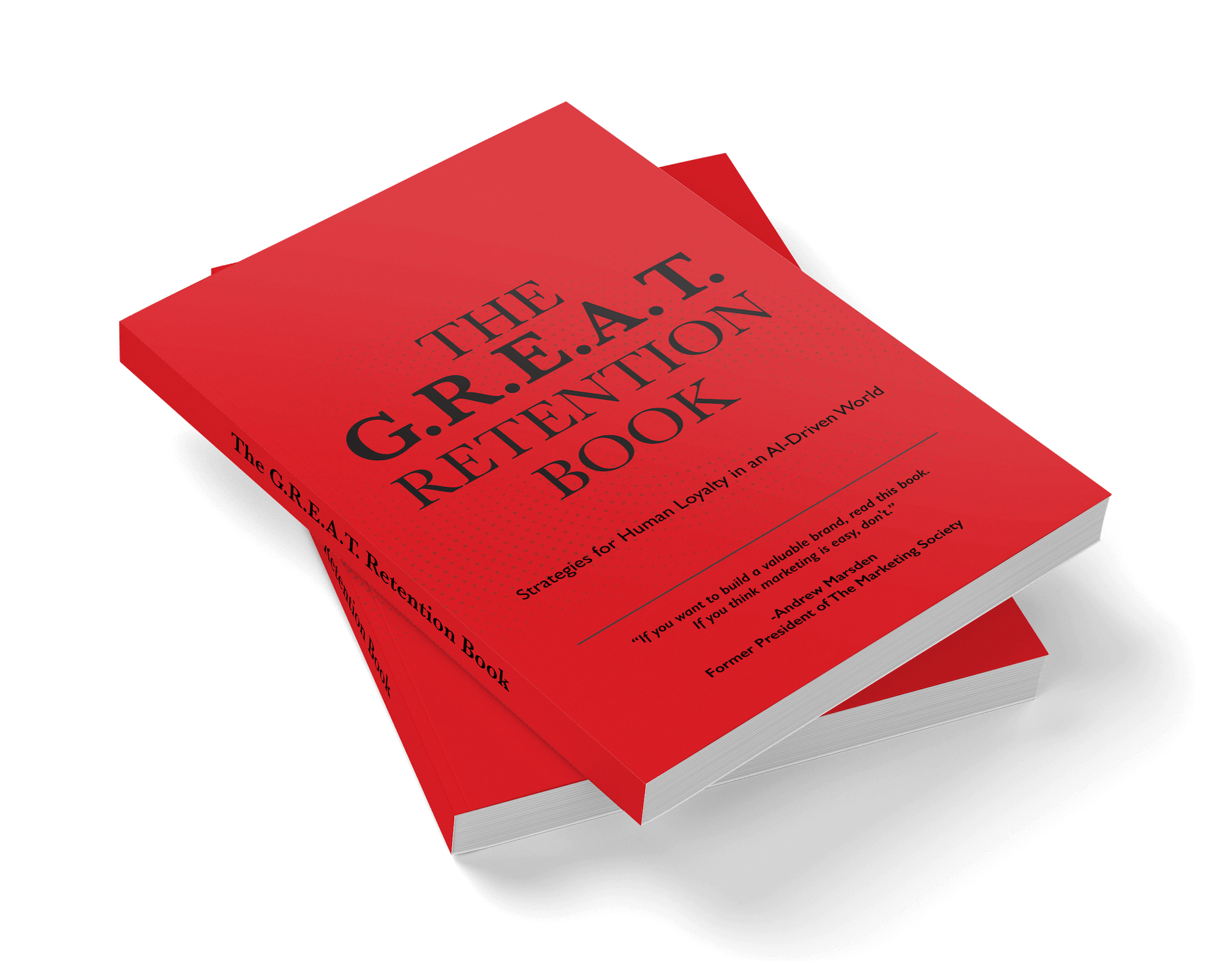
The G.R.E.A.T. Retention Book

01 / Read it

The thinking
behind the Method.

Explore its structure, principles and practical applications.

Explore the book
"If Marketing Warfare taught you how to win customers, this shows you how to stop them escaping like Finns at the first hint of small talk. Buy it—because in marketing, as in Finland, survival depends less on conquest and more on who’s still with you when the snow gets deep."
Professor Michael MainelliProfessor Michael MainelliPresidentZ/Yen Group; London Chamber of Commerce & Industry
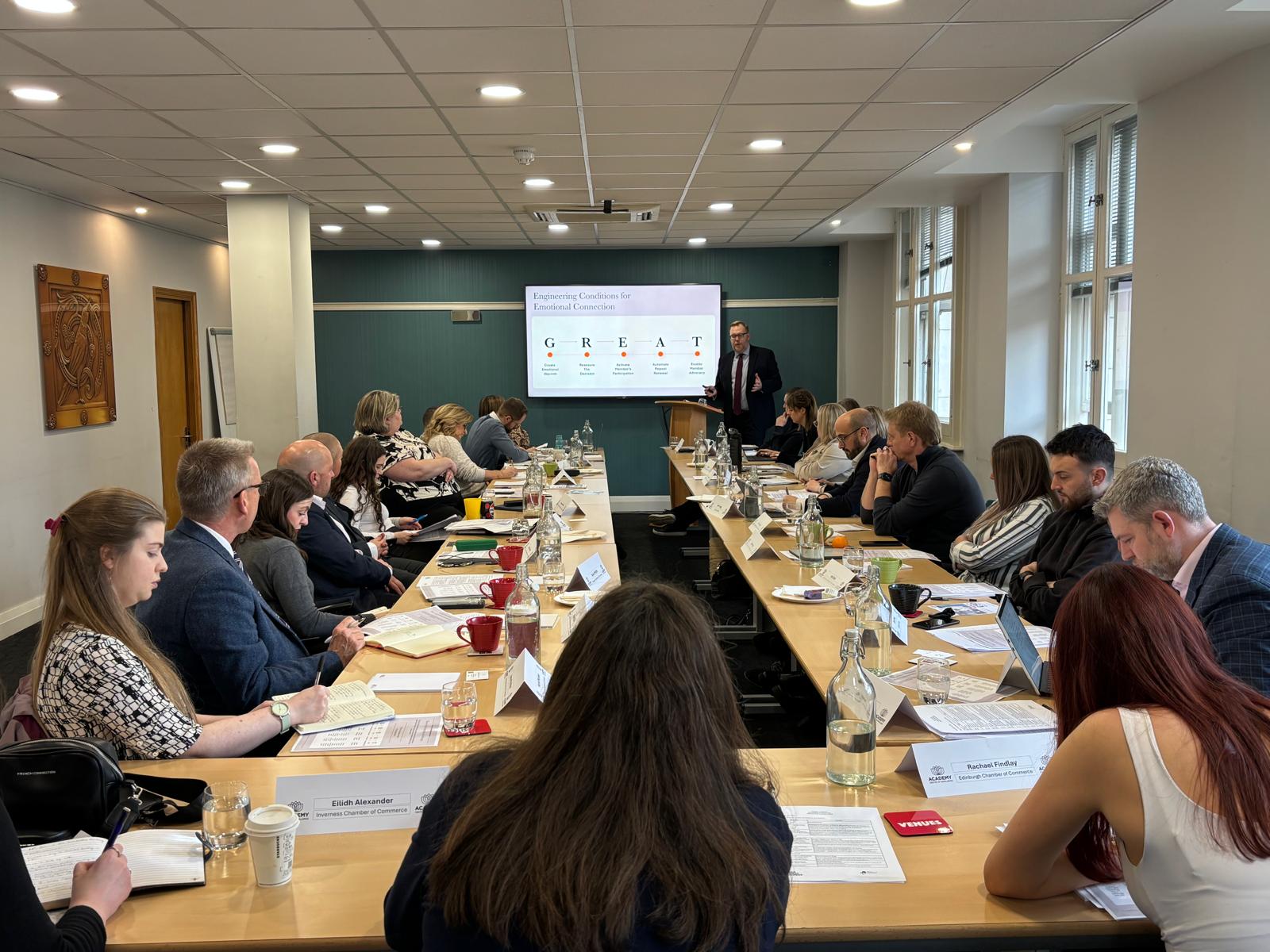
A G.R.E.A.T. Retention Workshop

02 / Experience it

Make the thinking
work for your team.

Apply the Method through facilitated workshops and leadership sessions.

Explore the workshop
"The Retention workshop was highly engaging and practical, offering clear, actionable insights that can be immediately applied in a business context. A valuable session for anyone looking to strengthen customer retention strategies."
Pavel FaraPavel FaraManaging DirectorBritish Chamber of Commerce Czech Republic