G.R.E.A.T. METHOD
BOOKS
WORKSHOP
ABOUT
CONTACT

British Bulgarian Chamber of Commerce

From retention workshop to stronger member engagement

Impact

Retention became a practical board-level priority

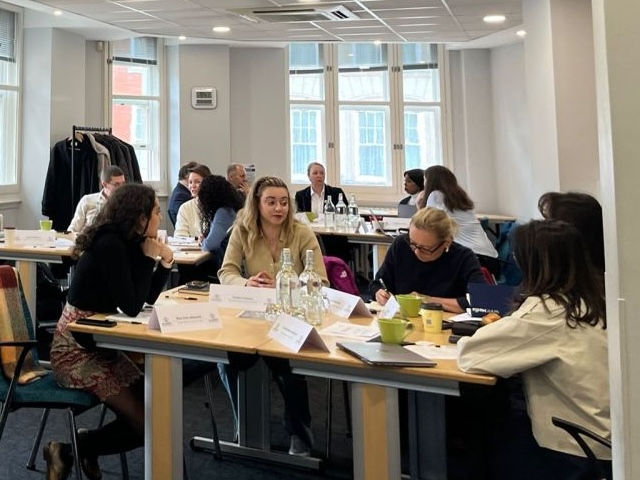
The workshop exercises were brought directly into the Chamber’s board retreat, helping move retention from theory into organisational practice.

The board team strengthened internal cohesion

By combining the workshop exercises with a 16 Personalities assessment, the team improved how they understood one another and worked together.

Leadership communication became more proactive

The Chair and Vice Chair began crafting regular communications and became actively involved in driving initiatives forward.

Member engagement showed a positive shift

Member feedback was encouraging, and the Chamber could already see a positive movement in engagement.

Testimonial

“The G.R.E.A.T. Retention Workshop was the standout session of the British Chambers' Academy programme for me. As someone for whom retention is central to my role, the practical tools were immediately actionable. We brought the exercises into our board retreat, paired them with a 16 Personalities assessment, and the results have been remarkable — stronger team cohesion, more proactive leadership communications, and measurably better member engagement. I cannot recommend this workshop highly enough.”
Isabel Videva
Members and Partners Coordinator
British Bulgarian Chamber of Commerce

The British Bulgarian Chamber of Commerce participated in the G.R.E.A.T. Retention Workshop as part of the British Chambers’ Academy programme.

For the Chamber, retention was not an abstract concept. It was directly connected to the role of membership management, board engagement, leadership communication, and the long-term value delivered to members.

The workshop provided practical exercises and tools that could be applied immediately inside the organisation. Rather than remaining as training material, the exercises were taken into the Chamber’s board retreat, where they became part of a wider discussion about how the team works together, communicates with members, and strengthens engagement.

Context

Like many membership organisations, the British Bulgarian Chamber of Commerce operates in an environment where member engagement cannot be taken for granted.

Retention depends not only on the value of individual events or services, but also on the quality of communication, leadership visibility, internal alignment, and the ability to make members feel recognised, understood, and involved.

The Chamber wanted practical ways to strengthen this work and turn retention from a general ambition into a more structured organisational practice.

Key Issue

Retention was important to the Chamber, but the team needed practical tools to turn it into shared action across the board and leadership.

The challenge was not simply to discuss member engagement, but to make it operational: something that could influence internal collaboration, leadership communication, and the way the Chamber engages with its members.

What Changed

Following the workshop, the Chamber applied the exercises at its board retreat, combining them with a 16 Personalities assessment.

This helped the team better understand one another, improve internal collaboration, and create a stronger basis for coordinated action.

The impact then moved beyond the boardroom. The Chamber began developing more regular communications from the Chair and Vice Chair, who became actively involved in driving initiatives forward. This created a clearer leadership voice and a stronger rhythm of communication with members.

Member feedback was encouraging, and the Chamber observed a positive shift in engagement.

Result

The workshop helped turn retention from a topic of discussion into a practical leadership and engagement process.

The shift was visible in two areas:

Board team:
workshop exercises → stronger team understanding → proactive leadership communication

Members:
regular communication → encouraging feedback → stronger engagement signals

The case demonstrates how retention work becomes most valuable when it is embedded into the organisation’s operating rhythm: board reflection, leadership communication, member feedback, and practical follow-through.